March's Inflation - The Bank of Canada just got some breathing room
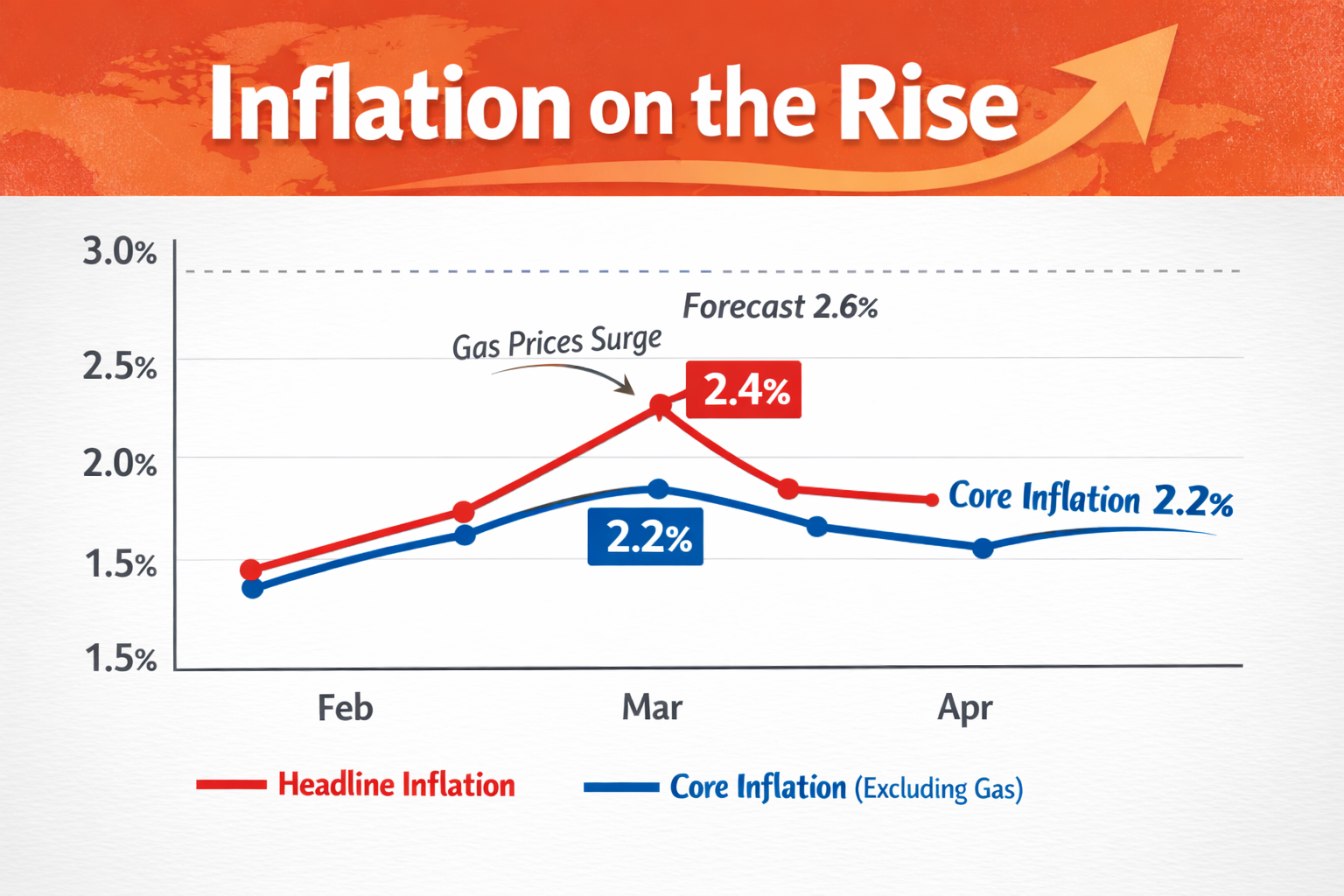
Inflation data dropped today and to nobody's surprise, it increased in March.
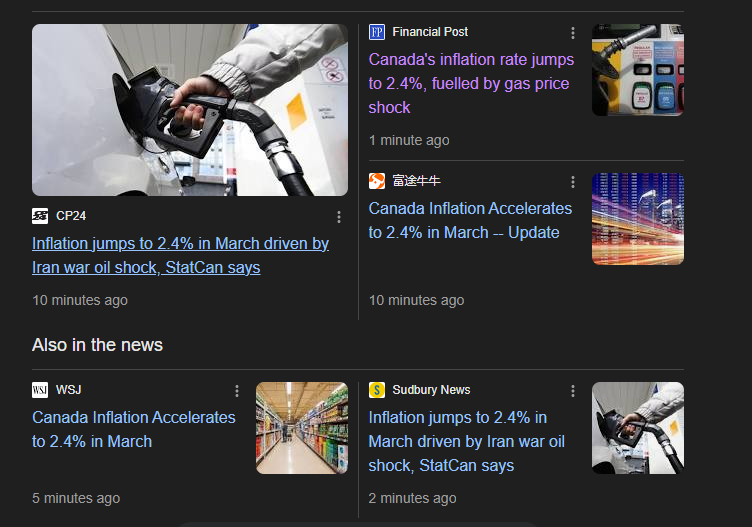
The Iran conflict sent energy prices soaring and that showed up in the numbers.
Headline inflation came in at 2.4%, up 0.9% on the month. Gas prices alone jumped 21.2%.
But here's what actually matters — it came in lower than analysts expected. Economists were forecasting 2.6%.
The fact that it printed below expectations is genuinely good news.
Strip out gasoline and the picture looks even better.
Inflation excluding gas is sitting at 2.2% — well within the Bank of Canada's comfort zone and actually lower than February's 2.4%. Core inflation, which is what the BoC prefers to measure, also declined slightly from the previous month. That's the number the Bank actually cares about, and it's moving in the right direction.
The bottom line is this: nothing in today's data pushes the Bank of Canada toward an immediate rate hike.
Why that matters more than you'd think.
The Bank was already clear at their last meeting — they're willing to look through temporary inflation increases driven by the war because raising rates won't reopen the Strait of Hormuz. You can't solve a supply shock with monetary policy. Couple that with the mediocre jobs numbers we saw recently and so far the data simply isn't telling a story that justifies any rate movement in either direction.
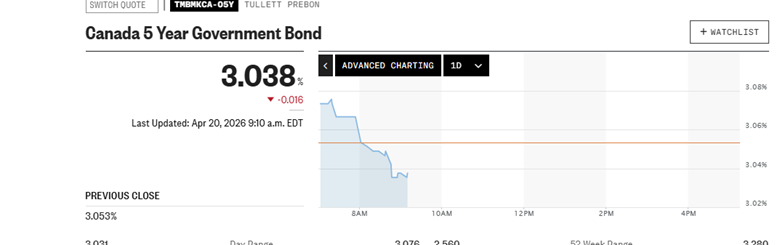
Bond yields reacted positively to today's news, declining on the back of weaker than expected inflation. Lower yields mean downward pressure on fixed mortgage rates. That said — and I can't stress this enough — bond yields have been extremely volatile over the past few months. One piece of good data doesn't change the environment. Don't anchor to any single reading.
The wildcard remains the Iran situation.
News out of the Middle East has been whiplash-inducing. Ceasefire one hour, back to conflict the next.
The most recent update this morning is that the US and Iran have ended their short-lived ceasefire, though Trump has taken advice to consider removing the naval blockade of the Strait of Hormuz as it's impeding further negotiation. Markets were at all-time highs on the S&P 500 at the end of last week.
As of 9:19am (The time I'm writing this), Iranian officials have announced they are positively reviewing participation in peace talks with the US — no final decision made yet. This comes after a weekend of negative headlines. Trump is also considering removing the naval blockade of the Strait of Hormuz to advance negotiations.
The situation remains fluid, as always.
The Bank of Canada meets April 29.
Based on everything we know today — below-expectation inflation, soft labour market, core inflation trending down — a hold is the overwhelming probability. But the Iran situation means nobody should be making confident predictions about what the next 90 days look like.
If you're sitting on a renewal or purchase decision and want to talk through what this means for your specific situation, reply to this email or book a call below.