Inflation jumped to 3.2%. Here's what actually matters
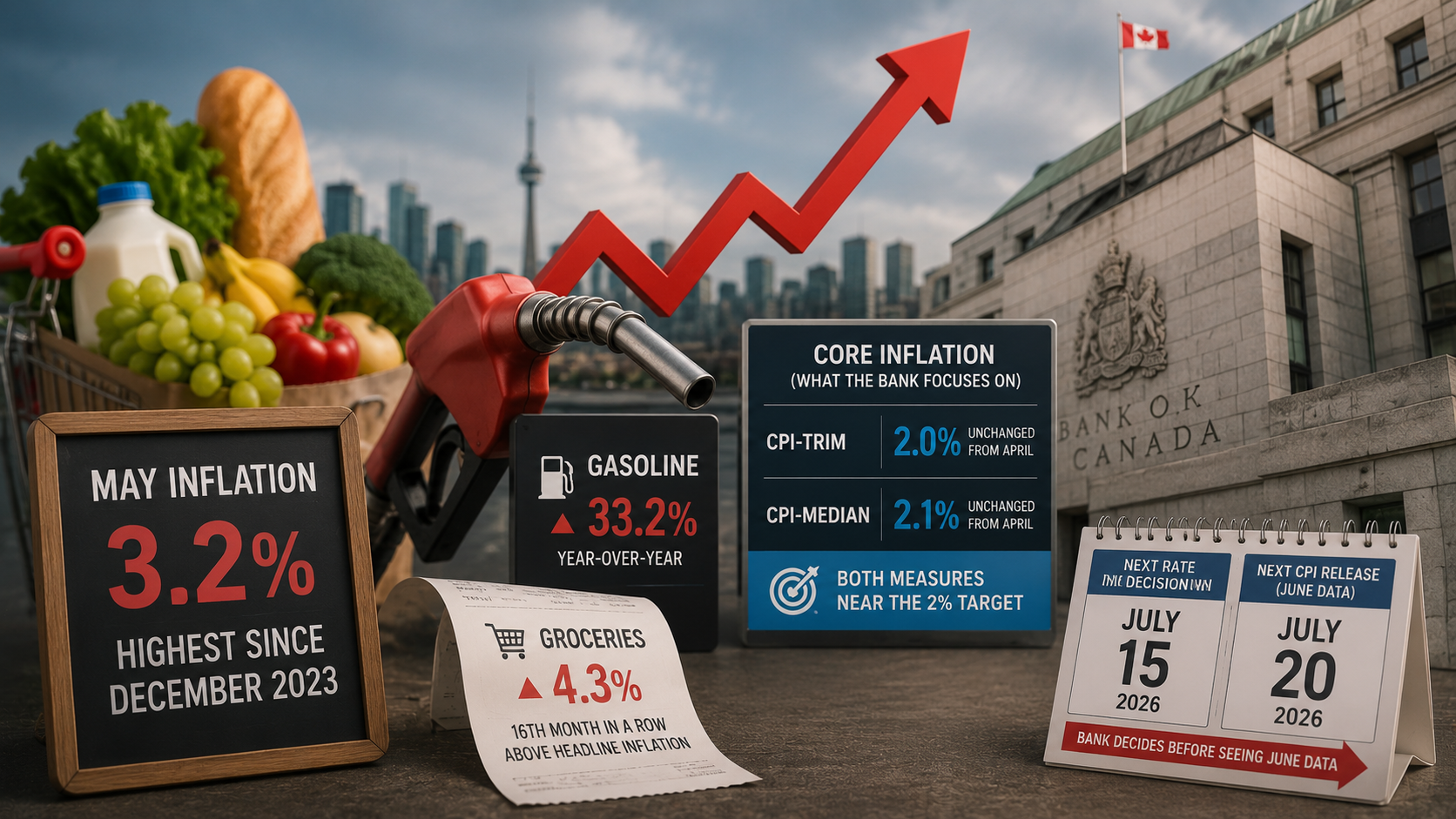
May's inflation print just came in hot — 3.2%, the highest reading since December 2023. If you stopped at the headline, you'd think the inflation fight just got harder.
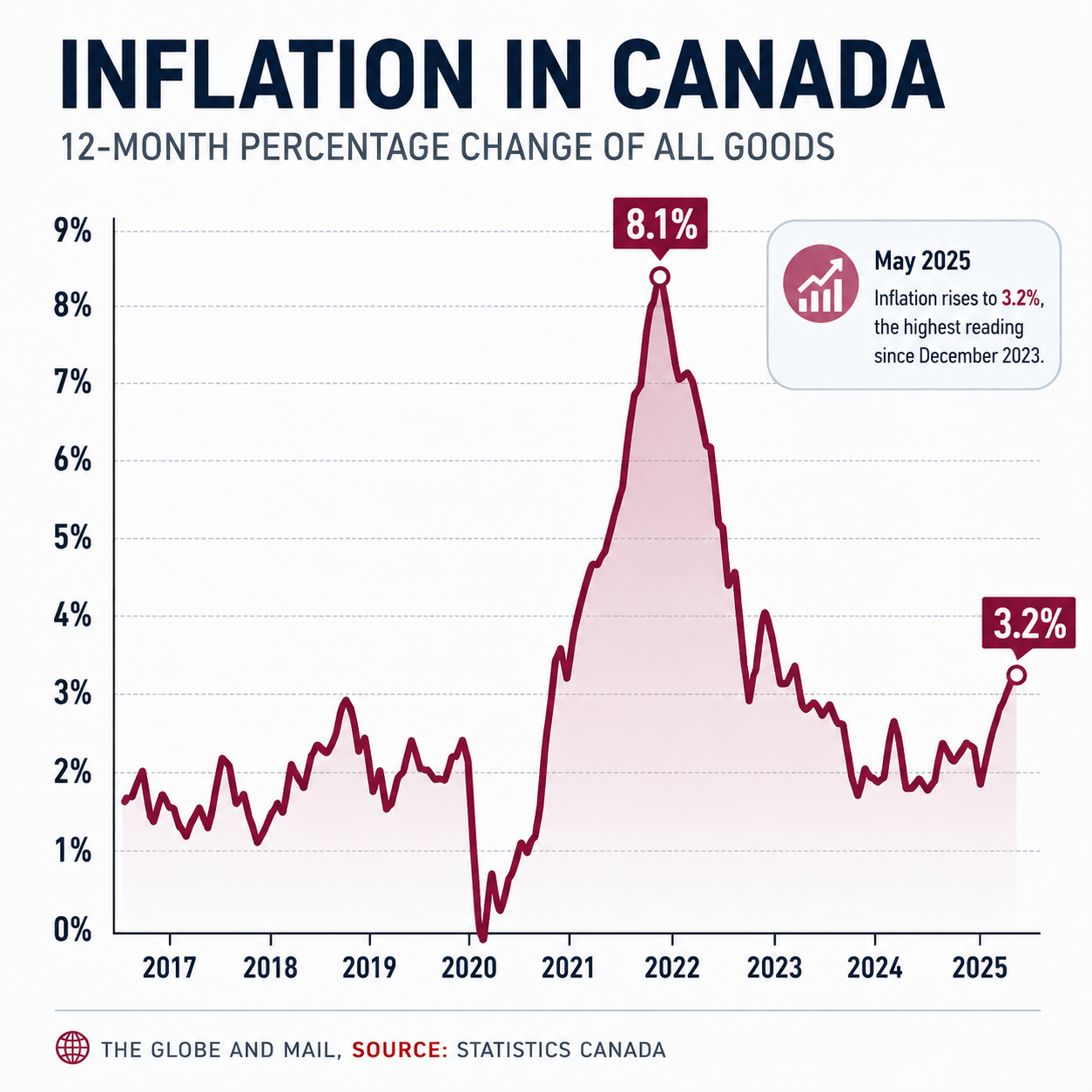
It didn't. Here's why.
What Happened
Headline CPI rose to 3.2% in May, up from 2.8% in April and above the 3.0% economists expected.
Almost all of it is gas and groceries.
Gasoline was up 33.2% year-over-year — the third straight month the Strait of Hormuz closure kept oil prices elevated.
Grocery prices rose 4.3%, the 16th straight month groceries have outpaced headline inflation.
BMO chief economist Doug Porter said in a note to clients Monday that June is tracking for a 10-per-cent decline in gas prices, "which should clip the headline result next month."
Quick Explainer: What Is Core Inflation, and Why Does the Bank Care More About It Than the Headline Number?
Headline CPI includes everything, even stuff that swings wildly for reasons that have nothing to do with how hot the Canadian economy is running. Gas spiking 33% because of a war near the Strait of Hormuz isn't Canadians overspending or businesses jacking up wages — it's an external shock.
Core inflation strips out the volatile stuff, mainly food and energy, to isolate the prices that actually respond to interest rates: wages, rent, services, the stuff businesses price based on domestic demand.
The Bank watches two main versions of this. CPI-trim throws out the most extreme price movers each month, up and down, and averages what's left. CPI-median takes the literal middle item in the basket, ranked by how much it moved — half the basket moved more, half moved less.
Both exist to answer one question: forget gas and tomatoes for a second, is inflation actually broad and sticky across this economy, or not?
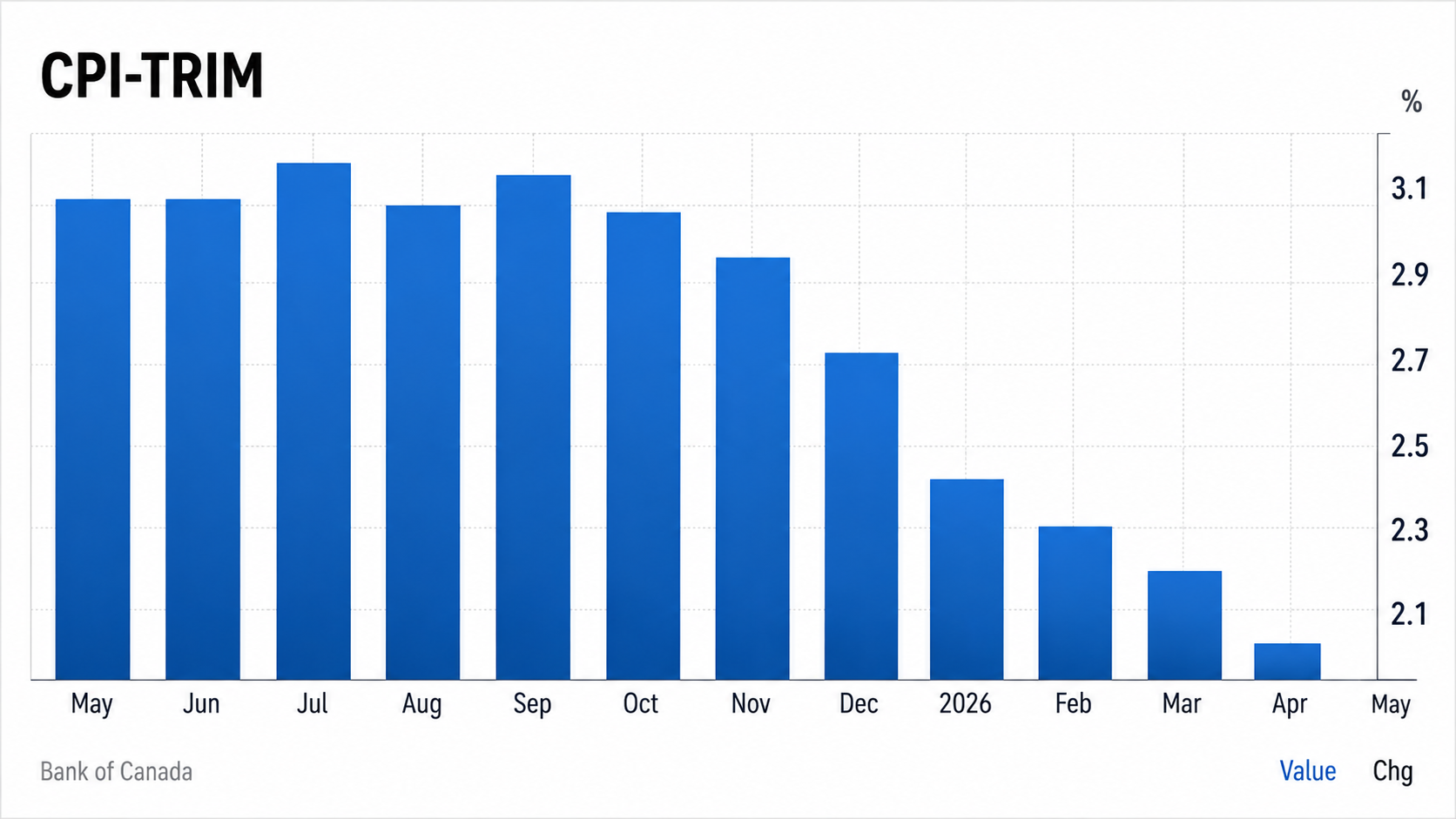
Right now: CPI-trim sits at 2.0%, CPI-median at 2.1% — both unchanged from April. Basically right at target. If these were climbing, that would mean the energy shock is bleeding into wages, rent, and everyday services, and the Bank would have a real reason to hike. They're not climbing. That's the most important line in this email.
Translation: this is still an energy story, not a demand story. The Bank doesn't react to a hot headline number on its own. It reacts to whether that number is spreading into the rest of the economy. Right now, it isn't.
The Next Rate Decision
Something most coverage of this report isn't mentioning: the Bank's next rate decision is July 15. The next CPI release — covering June, the month the ceasefire actually happened — doesn't land until July 20, five days later.
That means the Bank makes its July call using May's data.
Financial markets place odds of a rate hold at the central bank's next meeting at 93 per cent as of early Monday
If you want to talk through what this means for your specific mortgage — whether you're buying, renewing, or refinancing — feel free to book a call!
Austin Yeh is a Smith Manoeuvre Certified Professional and independent mortgage agent based in Toronto, funding mortgages across Canada. He specializes in advanced mortgage strategies for high-income earners, real estate investors, and self-employed borrowers.
Lender features and policies are subject to change. Always verify current product details directly with the lender or through an SMCP-certified mortgage broker. This article is for educational purposes and does not constitute financial or mortgage advice.